Acclaimed producer-director Guillermo del Toro has expressed his desire to film again in Mexico.
Speaking at the International Festival of Cinema in Guadalajara, the “Pan’s Labyrinth” and “Pacific Rim” director spoke of his longing to return.
“I owe it to myself as a person and as a narrator. I don’t want to die with this unfulfilled desire.”
Del Toro eventually hopes to shoot a vampire film based on his and Chuck Hogan’s novel “The Strain: The Silver Angel.”
“If I don’t die of a heart attack first, I’m going to do it,” he said. “I’ve wanted to do it for 15 years. I owe it to myself.”
Nevertheless, the director acknowledged the great fear that stems from the kidnapping of his businessman father in 1997.
“It’s like walking into a cantina with a pistol and there’s no structure in place to stop what happens next,” he told the crowd. “It’s one thing to talk about a social crisis, but another to talk about absolute social decay.”
His father was eventually released but Guadalajara native del Toro fled the country in response. He now lives in Toronto and the last film he shot on Mexican soil was the 2001 release “The Devil’s Backbone.”
Del Toro called for film students and aspiring filmmakers in the audience to remain true to their personal artistic vision. It was always a bad idea to compromise in order to secure financial support, the director said, pointing out that he was “the weirdest of filmmakers and was only ever interested in strange stories.”
The director added that Mexican cinema was never seen as a money spinner. In fact, when he started in the business, filmmakers had to sell their own tickets and set up the projectors doing performances.
“Mexican cinema, whether made with money or without, always provokes a reaction abroad. We exist. We continue to have a voice. Now in this digital moment, the survival of that voice is guaranteed.”
The prolific worker has a diverse range of projects on the table. He is developing the Amazon television series “A Killing on Carnival Row,” and is working on a fourth novel “The Boy in the Steel Cage.”
His next movie, “Crimson Peak” is in post-production and is set to be released in October. The horror film is set in Cumbria, England, and stars Mia Wasikowska.
Del Toro also revealed his plans to leave a legacy for young Mexican artists. He announced that he has included a scholarship in his will for novelists, scriptwriters and filmmakers to stay in his Los Angeles home and work on their own projects.
After his talk, the director collected folders, CD’s and USB’s from aspiring filmmakers, and promised to go through each of them personally.
“Nobody has the right not to be a good person,” he said when asked about directors who ignored young talent. “Being a bad guy takes a lot more effort.”
With the capture of one of Mexico’s most-wanted drug lords, Servando “La Tuta” Gomez, the government has created a power vacuum that could be filled by the Jalisco New Generation Cartel (CJNG).
The 49-year-old leader of the Knights Templar was arrested in Morelia, the capital of Michoacan, on Friday, February 26.
Servando “La Tuta” Gomez Martinez
The government had been hunting La Tuta for years, and had offered a US$2 million reward for his arrest. In November, Michoacan security specialist Alfredo Castillo Cervantes said the capture would be the “cherry on top.”
A ruthless criminal operator, La Tuta’s rise to infamy was an unconventional one. For years, he worked as a teacher in the hilly town of Arteaga, and was still listed on the payroll of a local school as recently as 2009.
President Enrique Peña Nieto congratulated the security forces on the result. He also revealed that he had been woken in the night by a text message from the Secretary of the Interior Miguel Angel Osorio Chong.
“I thought to myself, now what?” the President said. “But it was good news. I had told him that he could wake me in the night if he needed, but on the condition that it was to give me good news.”
Omar Trevino Morales
The arrest is a much needed win for the president, who has been rocked by a series of scandals and faced mass protests over the forced disappearance of 43 students in Guerrero. The government followed this success with another high-profile capture, in Monterrey, of Zetas leader Omar Trevino Morales only five days later.
Nevertheless, United States security analyst Eric L. Olson points out that such arrests can also cause problems.
“The bottom line is these captures are important, but one has to keep them in perspective,” he added. “They can unleash a lot more conflict and violence.”
La Tuta’s capture could spell the end of the Knights Templar, the quasi-religious criminal organization that he fronted. All of the group’s principal leaders have been arrested, as well as 225 public servants who are accused of protecting the cartel.
Yet as La Tuta himself publicly proclaimed, the Knights Templar were responding to demand and incentives.
“As we told you, we are a necessary evil,” the gangster told a British television crew last year. “Unfortunately or fortunately we are here. If we weren’t, another group would come.”
The gradual weakening of the cartel has actually led to an increase in violence in the region.
When the Knights Templar was at the height of its power in 2011 there were 773 homicides, while 904 were recorded in 2014.
One criminal gang who has benefited from its decline is the Jalisco based CJNG, which has been looking to take advantage of the region for years.
Michoacan is a strategically important site for drug gangs because it is a coastal state, and Lazaro Cardenas is the largest seaport in the country, providing drug dealers with a vast supply of chemicals which are then turned into methamphetamine and shipped to the United States.
The Jalisco New Generation Cartel (CJNG)
The Knights Templar’s reign began to unravel in 2013 when vigilante groups took up arms against the organization. La Tuta accused them of being sent by rival gangs and in fact, some evidence of infiltration exists.
“The story of armed vigilantes turning into violent crime groups is nothing new in Michoacan,” said Luis Felipe Rosiles, a reporter for Quadratin. “The signs are already there: the infighting, the lack of transparency and the fact that it’s now clear there are criminals among them.”
Analysts, including Attorney General Jesus Murillo Karam have accused the CJNG of arming self-defense groups in an effort to consolidate their position in the area.
The capture of La Tuta, although loudly celebrated by the government, may accelerate this process, as the CJNG move in to snatch the revenue streams left in his wake.
U.S. Ambassador Anthony Wayne has released a statement denouncing aggressions against the press in Mexico.
“Freedom of expression is one of the pillars of democracy and a priority of the government of the United States,” the ambassador said. “We energetically condemn recent aggressions against the media in the state of Mexico and in Tamaulipas. An attack against the freedom of the press is an attack against our shared democratic values.”
Governor Javier Duarte de Ochoa (left) with U.S. Ambassador Anthony Wayne (right)
In the statement, the ambassador mentioned his recent visit to Veracruz, where he met with controversial Governor Javier Duarte de Ochoa. However, he once again stopped short of criticism. “Recently I had the opportunity of meeting with journalists in the state of Veracruz, and separately, with the governor. I emphasized U.S. support for the freedom of press and expression, highlighting that an open and vibrant atmosphere in information media brings benefits to the private sector, to civil society and to all citizens.”
Following the encounter last week, the ambassador’s praise for Duarte sparked controversy on social media, as he described him as “a defender of democratic rights.”
Only two days earlier, The Hay Festival of literature and arts cancelled its event in Veracruz in protest against the failure to protect freedom of expression in the state. Festival organizers were explicitly critical of the governor.
“Since Mr. Duarte started in government in 2010 in Veracruz eleven journalists have been murdered and four more have disappeared,” it said in a statement. “A festival of culture and freedom like the Hay Festival cannot take place in an environment of violence against culture and freedom.”
The haunting imagery of “Plane Wreck at Los Gatos” has carried the ballad from the pen of Woody Guthrie to the stadium concerts of Bruce Springsteen.
A host of iconic musicians have covered the song along the way: Pete Seeger, Johnny Cash, Bob Dylan and Joan Baez, among others.
The lyrics tell the story of 28 migrant workers who were killed in 1948 when their plane crashed in Los Gatos Canyon en route to a deportation center in Southern California. Guthrie was incensed by a New York Times report which carried the names of a guard and the crew, but lumped the Mexicans together under the label “deportees.”
“The sky plane caught fire over Los Gatos Canyon,
A fireball of lightning, and shook all our hills,
Who are all these friends, all scattered like dry leaves?
The radio says, ‘They are just deportees.’”
California-born writer Tim Z. Hernandez has responded to Guthrie’s call. In his upcoming non-fiction book, tentatively titled “All They Will Call You,” he gives both names and stories to the previously anonymous crash victims.
“Without me realizing initially, this book is an attempt to answer that (Guthrie’s) question. Who are they? Well this is who they are,” the author told the Mexican Labyrinth.
Hernandez, himself the son of migrant farm workers, came across the story when he was researching his novel “Mañana Means Heaven.” A 1948 newspaper article, “100 prisoners see an airplane fall from the sky,” inspired him to tell the story of the fateful flight.
“The original idea was to create a fictional book. But I thought, rather than make up fake names, why not find a list of the real names and use them as the chapter titles?”
He started the painstaking process of searching online, contacting cemeteries and consulting county hall records. His ambitions grew with the investigation, and he decided to try to track down some of the victim’s families.
It was not until a local reporter ran the story that he was contacted by Jamie Ramirez, a relative of two of the passengers. Ramirez had come to the United States at 17 to work as a dishwasher and now owned a restaurant. He had been collecting information on the crash for years and left flowers at the unmarked mass grave every November.
Among his files was the faded newspaper clipping that the Mexican consulate sent the families in 1948.
“That newspaper had the full and complete list of names, surviving relatives and the hometown in Mexico where they were from. It had everything,” Hernandez said.
The author brought the list of names to the Catholic Diocese in 2011 and suggested that they build a memorial headstone. Together they raised $14,000 dollars. The stone is engraved with 32 falling leaves and the names of all of the passengers.
More than 1,000 people turned up for the inauguration in 2013. Blues group Lance Canales and The Flood played their version of “Plane Wreck at Los Gatos,” accompanied on stage by Hernandez and Ramirez, who read the names aloud. “Rest in peace,” the crowd responded as each name was uttered.
In January, Hernandez traveled to Mexico to meet seven of the 28 families he had successfully located. He brought along a videographer to record the trip and is now raising money to complete a documentary film.
Most of the families recalled their relatives with vivid and fond memories, but at times he needed to tread lightly. The family he tracked down in San Julian, Jalisco, was hesitant to discuss the past.
“They told me a little bit but there were some matters in the family they would just rather not discuss,” Hernandez said. “So I respected that and I tried to gather as much information as I could around that.”
Later in the trip, Hernandez enjoyed a moment of pure serendipity.
“As we were driving to Guadalajara we came across the town of Manalisco. We hadn’t planned for this visit because I thought it was somewhere else far away from our route. I checked my files and sure enough, it was the hometown of another passenger.”
They hit the brakes and headed into town to ask around. “So far I believe I have located another family, but I haven’t confirmed it yet,” Hernandez said.
When completed, the book will weave the stories of the incident, Guthrie’s song and the lives of the 32 passengers told through interviews, documents, letters and photographs.
While the immigration theme clearly resonates with the present moment, Hernandez is seeking to counter, rather than provoke political debate.
“Something gets missed when we continue using the same rhetoric, using the same language, entering the same discussion. To me this provides an opportunity to speak to a very human element,” he said. “What Woody Guthrie was getting at is that using a word like ‘deportee’ is a convenience for the political movers and shakers to not have to say who they are. So this is really about saying let’s forget about these labels and let’s talk about the individual.”
The memory of the U.S. crew is also integral to the story.
“I want to tell you about the immigration officer, I want to tell you about how he said goodbye to his wife that morning. I want to tell about the pilot and how he had trained all of his life and on that same level, I want to tell you about these 28 Mexicans and where they came from and their dreams.”
Hernandez had a surprise meeting with Woody Guthrie’s daughter Nora at a writer’s conference in California.
“My father believed in the importance of names,” she told him. “He would repeat them like a chant. Even just finding their names matters.”
Through his project, Hernandez has uncovered the names for the headstone and is set to restore them from anonymity in his book:
Miguel Negrete Alvarez. Tomas Aviña de Gracia. Francisco Llamas Duran. Santiago Garcia Elizondo. Rosalio Padilla Estrada. Tomas Padilla Marquez. Bernabe Lopez Garcia. Salvador Sandoval Hernandez. Severo Medina Lara. Elias Trujillo Macias. Jose Rodriguez Macias. Luis Lopez Medina. Manuel Calderon Merino. Luis Cuevas Miranda. Martin Razo Navarro. Ignacio Perez Navarro. Roman Ochoa Ochoa. Ramon Paredes Gonzalez. Guadalupe Ramirez Lara. Apolonio Ramirez Placencia. Alberto Carlos Raygoza. Guadalupe Hernandez Rodriguez. Maria Santana Rodriguez. Juan Valenzuela Ruiz. Wenceslao Flores Ruiz. Jose Valdivia Sanchez. Jesus Meza Santos. Baldomero Marcas Torres.
There are multiple stories explaining the volcanoes, Popocatepetl and Iztaccihuatl, which overlook the valley of Mexico. In the most popular legend, Popocatepetl, which translates as “the smoking mountain,” was sent to battle in a distant territory. The father of “the white woman,” Iztaccihuatl, promised the warrior his daughter’s hand in marriage if he returned victorious. While he was away, a love rival announced Popocatepetl had died and the deeply distraught Iztaccihuatl killed herself. When the warrior returned to discover the death of his lover, he carried her to the snow, hoping the cold would wake her. Instead he collapsed and they both transformed into mountains. This is why Iztaccihuatl resembles a sleeping woman, while the volcano Popocatepetl is fired by the rage of loss.
2. The tragic lovers of Guanajuato
For the price of a few pesos, visitors to the beautiful colonial city of Guanajuato can listen to a local youth artfully recount the legend of the Alley of the Kiss.
There are several versions to the story, but in most accounts Ana was a rich Spaniard who lived on the left side of the street, while Carlos was a poor miner who rented a room on the right. One night, Ana’s father, who wanted his daughter to marry a rich noble, discovered the pair kissing as they leant from their windows.
He threatened to kill his daughter if it happened again but Ana, intensely in love, met with Carlos the next night. Surprising the pair, the cruel father took a dagger to his daughter’s heart. As she died, Carlos bestowed a final kiss on his beloved’s hand before jumping to his death in the local mine.
3. Maximilian and Charlotte
After fifty years of independence, the French Emperor had his eye on weakened Mexico. To help secure these interests, Austrian nobleman Maximilian was installed as monarch. He and his young wife Charlotte traveled to the New World, genuinely believing they had the support of the people.
Only months after their coronation, French troops withdrew from the country, leaving the royal family isolated and in danger. Charlotte returned to Europe to beg for assistance but her husband was overthrown by the liberal army. The new president, Benito Juarez, ignored European powers, who asked for clemency, and oversaw Maximilian’s execution. “Poor Charlotte,” he said as he faced the firing squad. His wife suffered a mental breakdown and never recovered.
4. Frida Kahlo and Diego Rivera
The student Frida Kahlo used to spy on muralist Diego Rivera as he painted at her school in 1921, but they didn’t meet until a party seven years later. Their relationship was a tumultuous one, with persistent infidelity on both sides. One night, Frida was horrified to discover her husband in bed with her sister, while Diego was furious with his house-guest Leon Trotsky, after he learned the Russian revolutionary was having an affair with his wife.
Yet there was undoubtedly a profound depth of feeling to the relationship. Fridas’s love letters speak of their sublime connection. “I love you more than my own skin,” she wrote. The great muralist was a changed man following the death of his wife in 1954. “Too late now I realized that the most wonderful part of my life had been my love for Frida.”
5. Alma Reed and Felipe Carrillo
The American journalist Alma Reed fell in love with the governor of Yucatan, Felipe Carrillo, on a visit to Mexico in the 1920’s. Carrillo introduced her to the culture and history of the Maya and briefly returned with her to San Francisco. The couple engaged in 1923 and Carrillo commissioned a musician to write “La Peregrina” (The Pilgrim), which is dedicated to his fiancee and remains popular to this day. Tragically, three weeks after returning to Mexico, the popular governor was captured by the rebel army of Adolfo de la Huerta. Carrillo was executed by firing squad only three months before the rebellion was put down.
Mexican college students complaining about having too much homework have found a novel way to release their frustrations: by logging onto twitter and bashing ESDAI, a hospitality course offered by the Pan-American University.
“I’m going to change to ESDAI to learn to make muffins!” said Melina Villafaña. “ESDAI is for housewives, they teach you to run a home,” claimed Alejandro Moreno.
Some social media users defend the course and the role of housewives in general. They point to the importance of family and argue that it is good for women to run this most important of businesses.
Others complain that people fail to recognize the challenging nature of the course.
“Everyone thinks that studying ESDAI means learning to sweep and nothing else, but if they had to deal with the stress that is involved they wouldn’t survive,” said former student Paty Arias.
More often than not, the posts are critical.
“I can’t understand why my best friend makes fun of me for not going to college if she went to study ESDAI!” complained Maxi Enriquez.
The School for the Administration of Institutions (ESDAI) offers the much-debated degree course, which is exclusively for women.
Among the books listed for study on the university website are some practical guides with titles that seem to come straight out of Victorian Britain.
“Cleaning the House and Caring for Clothing” and “A Woman’s Mission in the Administration of the Home,” are among the selection.
Yet as ESDAI graduate Gaby Vazquez pointed out: “Some of what is taught can be applied in the home, but the reach is much greater.”
The Pan-American University is a private, Catholic institution set up by the conservative Opus Dei organization. President Enrique Peña Nieto is among its famous alumni, having graduated in Law from its Mexico City campus.
It is in part because of the university’s high tuition costs that ESDAI has acquired its difficult to shake image. It is seen as a school that teaches social graces, where elite young women prepare for marriage by training in the arts of cookery, floral arrangement and table manners. According to the popular view, ESDAI is the Mexican answer to the Swiss finishing schools that aristocratic women like Diana Princess of Wales attended.
Yet in reality the school offers a highly employable degree allowing students to develop the skills necessary to work in Mexico’s lucrative and growing hospitality industry.
“When you enter the school, you instantly realize that this is not a course for housewives.” said course director Rocío Ruiz, “If you go in you see that we have more laboratories than engineering. This is a scientific course with a specific focus on the hospitality industry.”
Indeed, ESDAI graduates are often sought out by restaurants and hotels. Others have successfully launched their own businesses. The school is home to state-of-the-art facilities and offers internship placements in companies throughout Mexico and as far afield as France and Spain. Noted alumni include several famous culinary experts and the former editor of “Soy Chef,” an important food magazine.
Hospitality is big business in Mexico and ESDAI graduates commonly find work in restaurant and hotel management. Tourism is already the fifth biggest source of revenue in the country, with 24 million international visitors in 2013, bringing an estimated total contribution of $US146 billion. If growth continues as forecast, by 2018 the sector will become the third source of revenue.
Yet Rocío Ruiz admits outsiders don’t always take the course seriously. “We are working on the school’s image,” she said.
Part of the problem is that the course is only open to women. While ESDAI graduates are at the receiving end of plenty of prejudices, the gender-specific course may also promote the stereotype that women are more suited to serve than men.
Mariana Espeleta is a sociology teacher who has written extensively on gender.
“Associating women with service, naturalizing their presence in the role of attending and caring for others, promotes the harmful belief that women equal service,” she said.
The degree school has state-of-the-art facilities
Nevertheless, Espeleta concedes that schools like ESDAI achieve positive results.
“They are seeking to professionally train women in these kinds of activities and I understand that the objective is to allow them to practice in a paid context. In this case, it could help women rise above conditions of inequality thanks to the obtainment of a salary.”
The Jaltepec Education Center in Jocotopec is another school that offers hospitality courses only to women. The background of the students contrasts starkly with those from ESDAI, as it is a non-profit college dedicated to improving the lives of impoverished families.
A student from Jaltepec Education Center
In this context, the orientation towards women has an empowering impact. Students that are disadvantaged, both by gender and economic circumstances, are given the tools necessary to enter the world of paid employment.
“Our school is for girls who need help,” school director Guadalupe Canepa Campos said. “It’s a technical career of two years, not a career of four years, because they need to work and they need to work soon.”
Taking the course has lasting benefits.
“This school has a big impact. The students change their lives and the lives of their families, as well as improve the circumstances of the families they will have in the future.”
Two fishermen survived 24 days lost at sea before being rescued by a cargo boat off the coast of Guerrero, Southern Mexico.
Daniel Guerrero Martinez, 42, and his son Isaias, 18, reported that they survived on a diet of raw fish. “We drank the blood of turtles and ate the meat, and we caught small fish and sharks” said Martinez. The pair were rushed to hospital in Acupulco for dehydration treatment but were released yesterday. After an 18-hour car journey they made a triumphant return to their hometown in Chiapas state.
The entire community came out into the streets to greet them for a party with a mariachi band and fireworks. Locals welcomed them with a hug and formed lines to take photos at their side. “I never lost hope of surviving, I put myself in God’s hands,” said Martinez. “I am happy, content. I don’t have words to thank you. It’s beautiful that the town welcomes us like this.” Father and son have both decided to change jobs. “We promised that if we got out alive, we’d never return to the sea,” Martinez said. The pair set off from the town of Costa Azul in Chiapas on December 28 last year but they were pushed out into the ocean by stormy weather.
The story echoes that of another fisherman, Jose Salvador Alvarengo, who departed from the same village in December 2012 and claims to have survived 13 months after washing up on a tiny island in the North Pacific Ocean. Skeptics have questioned the veracity of the story, yet it is difficult to imagine another explanation for Alvarengo and his boat’s appearance on the island, which is 6,200 miles away from the place he was last seen. His lawyers report that he has passed lie detector tests when asked about the journey.
In a press conference on Tuesday that was supposed to revitalize Enrique Peña Nieto’s tarnished image, the Mexican president committed a major gaffe, overshadowing any favorable coverage of the event.
After announcing that he was appointing a special prosecutor to investigate allegations of “conflicts of interest” in his administration, including a housing scandal involving him and his wife, the president stepped away from the podium. There was no applause from the reporters in attendance and he jokily complained: “I knew they wouldn’t clap.”
The phrase led to a long series of mocking tweets and generated a new hashtag: #YaSeQueNoAplauden, that spread like wildfire.
“Breaking: Enrique Peña Nieto proposes National Commission for Applauses,” said Jose Aurelio Vargas.
A picture showing the president dressed as Lady Gaga circulated online, under a caption referencing the pop star’s hit single “I Live for the Applause.”
This is not the first time an off-the-cuff remark from the Enrique Peña Nieto administration has generated a storm of negative online content.
Attorney General Jesus Murillo Karam caused a similar reaction after complaining: “Ya me cansé” (I’m tired) at a November press conference on the investigation of the kidnapping of 43 students.
The phrase became a battle cry for frustrated Mexicans looking for an end to violence and corruption. “Ya me cansé” is emblazoned on the banners of protesting students and was top trending topic on Mexican twitter for weeks. It received considerable international attention and spawned a counterpart from north of the border: “#UStired2.”
The latest unfortunate remark has only added to an atmosphere of cynicism concerning the president’s announcement at the event.
Outside of Mexico, Peña Nieto’s decision to open himself up to investigation was widely reported as a bold and surprising move. Yet most domestic commentators agree that the new special prosecutor Virgilio Andrade would gain little from damaging his own boss’ reputation. Instead, an independent investigation is seen as necessary.
The press conference reeked of political theater and did little to reassure the public, as Andrade was brought on stage to hug the very man he is supposed to be impartially judging.
El Semanariosummed up the paradox nicely: “Virgilio Andrade has a conflict of interest in his investigation of conflicts of interest.”
More than four months on from the forced disappearance of 43 student protesters in southern Mexico, there is still intense debate about the motivation for the attack.
The Mexican government has placed new emphasis on a theory that could explain why police and cartel hitmen kidnapped and probably massacred the unarmed group in Iguala, Guerrero state, last September.
Captured members of the Guerreros Unidos (United Warriors) cartel have testified that they viewed the student’s presence in Iguala as an aggression because they mistakenly believed members of a rival gang Los Rojos (The Reds) were among those traveling through town that night.
The theory was repeated by Attorney General Jesús Murillo Karam during a press conference on January 27.
Before dawn on a cold winter’s morning in a field outside of Guadalajara, a row of young people file past a bonfire and throw tobacco into the flames. The women wear long flowing dresses, while the men are shirtless and shiver silently in the dark.
After throwing their handful, they take turns to crawl on hands and knees into a dark circular dome with an earthen floor, known as a temazcal. A group of about 40 people huddle inside, chanting over a drumbeat. A shaman takes his place near the center and calls for a scorching volcanic stone to be brought in. His assistant gathers the rock, known as an abuelita (grandma) from the fire with a shovel and brings the load through the mouth of the dome. “Medicine coming!” he calls as he deposits it in the pit.
The shaman then pours a bucket of scented water onto the rock. A loud hiss sounds, and steam pirouettes from the flaming stone, filling the structure.
“Do not be afraid,” the shaman says, “Feel the steam touch you. Let mother earth embrace you.”
The heat is almost overpowering, filling the nostrils and burning the ears. The scalding vapor hits the back of the throat and the lungs are filled with every breath. The shaman speaks over a penetrating drumbeat, giving an impassioned and commanding sermon on nature and the oneness of all. He even meanders into current events, explicitly referring to the disappeared students of Ayotzinapa.
“We call for a response to the violence in our motherland, to the bloodshed in Michoacan and Guerrero.”
“We need to organize!” a female voice shouts over the hissing of the rocks.
“We do,” the shaman agrees, “but we call for a response free from violence, with no anger or arms.”
The temazcal ritual dates back to the ancient Mayans, who performed sweaty ceremonies for the sick or for soldiers returning from battle. Sometimes hallucinogenic drugs like peyote were taken to enhance the experience. The ritual represents the return to the womb, allowing the individual to separate from the outside world and reconnect with the inner self.
“The first few times I felt like I was drowning,” says Jose Soler, who had his first temazcal experience three years ago. “The heat was so intense. With time this sensation left and I began to enjoy it. It’s a moment of stopping and listening, of cleansing and rebirth.”
Body temperature during a ceremony can rise to 40°C (104°F) resulting in an increased heartbeat that promotes the release of toxins from the body.
However, the temazcal experience can be unpleasant, especially to newcomers not used to such heat. In the United States, where sweat lodges are traditional among Native American communities, there have been reports of deaths when improperly trained outsiders have attempted to organize them.
Three people died in 2009 in an overcrowded temporary lodge near Sedona, Arizona when self-help guru James Arthur Ray called for his followers to abstain from food and water for 36 hours.
In Mexico, permanent temazcal structures are likely to be far safer and better designed. Nowadays, spa-hotels frequently offer some version of the ceremony, with very little risk to the participants.
However, the popularity of the ritual has left the tourist industry open to accusations of cultural appropriation. Critics say they employ ancient indigenous practices to make a fast buck.
“When they are saunas it seems like a good idea,”says Ana Mar Osuna, who was 12 when she first participated in the ritual. “It’s a good space to relax. But it doesn’t seem respectful to call them temazcales, because a temazcal is much more than a steam bath.”
Fernando Cabello, who has been regularly taking temazcales since 1997, believes it’s inappropriate to run the ritual for profit. “This ceremony is for the people, we all have the right to enter,” he says.
Yet Barbara Varicchio, the head of sales for Dos Palmas Eco Tours, welcomes the opportunity to work with local indigenous communities. She argues that outsiders partaking in the experience are helping to develop tourism in the most positive way.
“By keeping the ancient steam bath practice alive, we are encouraging sustainable tourism and enabling traditional communities to earn their livelihood bydoing what their ancestors did.”
Temazcal Guidelines
–Anyone with diabetes or heart disease should steer clear, as should those susceptible to claustrophobia.
–Prevent dehydration by drinking a lot of water the day of the ceremony.
–Clothing requirements vary. Men generally wear shorts, and women long dresses. Hotels may provide the appropriate clothing. Be aware that you will get dirty.
–The cost of temazcales can vary wildly. The annual Raices de la Tierra festival in San Isidro Mazatepec covers costs with a 150-peso contribution for multiple ceremonies, while El Chante Spa hotel in Jocotepec will charge 2,320 pesos for a private two-person temazcal.


 His next movie, “Crimson Peak” is in post-production and is set to be released in October. The horror film is set in Cumbria, England, and stars Mia Wasikowska.




 tes as “the smoking mountain,” was sent to battle in a distant territory. The father of “the white woman,” Iztaccihuatl, promised the warrior his daughter’s hand in marriage if he returned victorious. While he was away, a love rival announced Popocatepetl had died and the deeply distraught Iztaccihuatl killed herself. When the warrior returned to discover the death of his lover, he carried her to the snow, hoping the cold would wake her. Instead he collapsed and they both transformed into mountains. This is why Iztaccihuatl resembles a sleeping woman, while the volcano Popocatepetl is fired by the rage of loss.
 discovered the pair kissing as they leant from their windows.
 the support of the people.
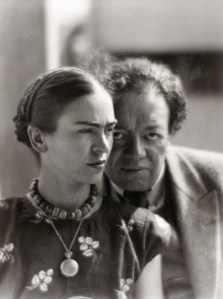 he learned the Russian revolutionary was having an affair with his wife.
 titles that seem to come straight out of Victorian Britain.


 made a triumphant return to their hometown in Chiapas state.


 m the flaming stone, filling the structure.
 popularity of the ritual has left the tourist industry open to accusations of cultural appropriation. Critics say they employ ancient indigenous practices to make a fast buck.
 “It’s a good space to relax. But it doesn’t seem respectful to call them temazcales, because a temazcal is much more than a steam bath.”


 The Mexican Labyrinth