El Chapo escaped as fellow drug baron La Tuta faked heart attack

rtr_el_chapo_04_jc_150713_16x9_992

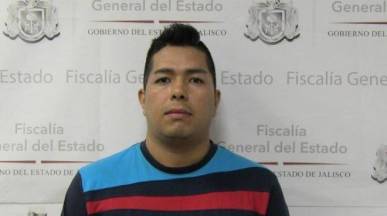
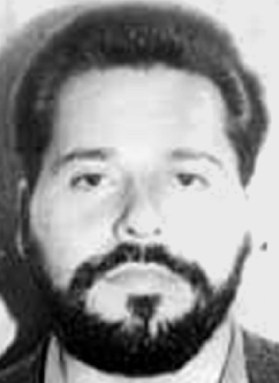
The world’s most-wanted criminal, Joaquin “El Chapo” Guzman escaped from jail with the aid of imprisoned drug baron “La Tuta,” who suffered an apparent heart attack, leaving only two guards to monitor 200 cameras.

Prosecutors believe the notorious Mexican prisoners worked together on the perfectly executed plan, with Servando “La Tuta” Gomez distracting guards so Guzman could flee. La Tuta, the head of the Knights Templar cartel, was taken to hospital with severe chest pains, but was back in his cell only a few hours later.

CCTV footage has revealed that the two agents responsible for monitoring Guzman’s cell played solitaire on their computers as the infamous prisoner slipped away. Both guards had previously claimed that their screens froze during the incident.

Mexico has arrested 20 people in connection with Guzman’s brazen escape through an underground tunnel equipped with a motorbike, air vents and electric light.

Former national prison director Celina Oseguera is among those detained. Another inmate testified that she regularly visited Guzman. The witness, Sigifredo Najera Talamantes, later died of a heart attack in his cell, raising suspicions of murder.

The government has been accused of hiding a video that includes loud drilling sounds in the moments before Guzman is shown escaping through a hole in his shower floor. The video could prove prison staff were aware of what was happening.

According to magazine Proceso: “the blows of metal against concrete are heard in Guzman’s cell minutes before he disappeared from view.”

Guards took 18 whole minutes to reach Guzman’s cell after realizing he had left. It was another three hours before the prison issued a “code red” alert which automatically closes the nearby airport outside Mexico City.

Mexico’s president Enrique Peña Nieto was reportedly playing dominoes on an airplane to France when he learned of the escape.

Much like George Bush, who carried on reading to schoolchildren after news broke of the World Trade Centre attacks, the Mexican president insisted his stunned advisers finish the game, which he won.

Mexico has offered a 60 million pesos ($3.8 million) reward for information leading to Guzman’s recapture.

Since his escape, the fugitive has openly mocked authorities. Photos circulating online apparently show him drinking beer and riding in an aircraft. Guzman even appeared to threaten Donald Trump, who has directed insulting remarks at Mexico. “I’ll make you eat your words,” he tweeted to the presidential candidate.

Twitter: @Stephentwoodman

Posted in News | Tagged , , , | Leave a comment

The magician’s Mexico part two: Is there a place for witchcraft in a skeptic’s world?

Picture2

Witchcraft is powerful in Mexico. A spiritual cleansing can safeguard against bewitchment. A wife can put a spell on a husband to stop him philandering. A storekeeper can hire a witch to put rivals out of business.

Witchcraft has been working since before the Spanish arrived. In Aztec society, shamans were respected for their healing powers and spirituality. Naguales could shapeshift into dogs, jaguars or pumas.

The Spanish brought Satan to Mexico and the concept was grafted onto the local world view.

Witches in Spain were burned at the stake, their powers deemed diabolical. Yet while sorcery was condemned by the church, the Spanish conquest inspired a witchcraft boom in the region. Iberian spells and techniques were adopted by the natives. Hair and blood were combined with indigenous materials like plants, seeds, or bird feathers.

This hybrid culture of sorcery has reigned ever since.

img471 [1280x768]

The Witches of Power by Jose Gil Olmos

As Jose Gil Olmos documents in his book, The Witches of Power, magical thinking has flourished among the nation’s powerful. Francisco Madero, the “father of the Mexican Revolution,” spoke to the dead, President Jose Lopez Portillo believed he was an incarnation of Quetzalcoatl, and Carlos Salinas sought counsel from a crack team of sorcerers.

What’s more, the rapid growth of the cult of Santa Muerte (Saint Death) and the rising interest in folk saints like Niño Fidencio, Jesus Malverde and Juan Soldado show that the Vatican has been unable to impose limits on Mexico’s culture of devotion.

But what if you’re a skeptic of the paranormal? Is it right to dismiss witchcraft as having no place in society, as being of no interest or value simply because it’s unscientific?

The answer is no, for a number of reasons.

Historically, magical thinking has played a key role in regulating indigenous communities. Fear of bewitchment helps safeguard against selfish and threatening behavior. In addition, magic can help protect natural resources. In Miradas indigenas sobre una naturaleza entristecida, (Indigneous Gazes Upon a Saddened Nature) anthropologist Elena Lazos and ethnologist Luisa Pare demonstrate that environmental sustainability depends in large part on the collective social myths of the community. Using more resources than necessary or hunting pregnant animals are misdemeanors that can be swiftly punished by spells.

Picture3

Alan Moore

The animism of native Mexican religion promotes respect for the environment because it says that everything in nature, every tree and rock, is inhabited by a sacred essence which the shaman can access for guidance.

British writer and magician Alan Moore sees shamans as direct channels of the divine. The Spanish priests brought to replace them compare very unfavorably.

“When Christianity comes in, when monotheism comes in, then all of a sudden you’ve got a priest cast moving in between the worshipper and the object of worship,” Moore says. “You no longer have a direct relationship with the godhead. The priests don’t really necessarily have a relationship with the godhead. They have just got a book that tells you about some people who lived a long time ago who did have a direct relationship with the godhead.”

Of course, to a skeptic who rejects the concept of the divine, the idea that animism brings it closer is just another fiction. But this doesn’t mean that Latin American magical systems can’t teach contain valuable lessons.

Santeria practitioner Charles Guelperin points out that the orishas, or gods, in his religion have parallels in a variety of other cultures and have emerged independently in different times and places. Obatala, to take one example, is the greatest of gods. He dresses in white and is the ruler of the sky, exactly like Greek god Zeus.

22160923E

Charles Guelperin

“In Greece, Obatala is Zeus. Shango is Apollo. Oshun is Aprohidite,” he says. “In Egypt, Osiris, Horus, and so on and so forth. Even China has the same orishas that we have. In Japanese Shinto there are the same orishas.”

U.S. mythologist Joseph Campbell sought to find connections between the myths of different cultures.

His philosophy can be summarized by his statement that “every religion is true one way or another. It is true when understood metaphorically. But when it gets stuck to its own metaphors, interpreting them as facts, then you are in trouble.”

Campbell believed that the parallels between myths prove that the stories reflect timeless truths.

“You’ve got the same body, with the same organs and energies, that Cro-Magnon man had thirty thousand years ago. Living a human life in New York City or living a human life in the caves, you go through the same stages of childhood, coming to sexual maturity, transformation of the dependency of childhood into the responsibility of manhood or womanhood, marriage, then failure of the body, gradual loss of its powers, and death. You have the same body, the same bodily experiences, and so you respond to the same images.”

Joseph_Campbell_AP8905130582

Mythologist Joseph Campbell

Campbell takes the Aztec legend of an eagle wrestling with a snake as an example. This myth, which chimes deeply with all humans, was found in Ancient Babylon and in Buddhism, Hinduism, and medieval Christianity.

“The serpent bound to the earth, the eagle in spiritual flight – isn’t that conflict something we all experience? And then, when the two amalgamate, we get a wonderful dragon, a serpent with wings. All over the earth people recognize these images. Whether I am reading Polynesian or Iroquois or Egyptian myths, the images are the same, and they are talking about the same problems.”

It is common to use scientific arguments to dismiss magic as nonsense. Personal and eyewitness testimony are the lowest form of evidence and fall short of the standards required by scientists. Randomized, controlled studies have debunked superstitious claims and enhanced our understanding of the world.

But science also shows that metaphor and imagery can have very real power. The healing practices of Latin American witches may rely on therapeutic suggestion, but that does not invalidate their effect.

In fact, the placebo effect is the most natural, least invasive medicine of all. Some studies show that placebos can improve health symptoms even when the patient knows they are taking a fake drug. In the same way, perhaps even skeptics can benefit from witchcraft.

To Joseph Campbell, magical and religious rituals are an essential part of a healthy community. “If you want to find out what it means to have a society without any rituals, read the New York Times,” he warns. The news of the day chronicles “destructive and violent acts by young people who don’t know how to behave in a civilized society.” During puberty rites in certain societies, “there are teeth knocked out, there are scarifications, there are circumcisions, there are all kinds of things done.” In modern society, these rituals have been abandoned. For Campbell, young people lack the rituals they need to become well-adjusted members of the community. So where do they find their myths?

“They make them up themselves. This is why we have graffiti all over the city. These kids have their own gangs and their own initiations and their own morality, and they’re doing the best they can. But they’re dangerous because their own laws are not those of the city. They have not been initiated into our society.”

Mexico’s indigenous communities face rampant social problems: alcoholism, violence, and unemployment. As a nation, Mexico faces acute environmental challenges and a narco-culture that prevails in certain areas of the country. In this context, it is difficult to celebrate the move away from animistic spirituality. A healthy skepticism of the supernatural should not lead us to dismiss the value, metaphorical power and beauty of indigenous systems of ritual and myth.

Twitter: @Stephentwoodman

Posted in Spirituality | Tagged , , , , , , , , , , , , , , , , , , , , , , , , | Leave a comment

The magician’s Mexico part one: a whistle-stop tour of witchcraft in Guadalajara

Picture1

A denial from the doctor

The village of San Martin de las Flores huddles behind a series of clambering hills. Although linked to Guadalajara by a twisting, rocky road, the geographical remoteness of the community gives it a distinct cultural identity.

The area is best known as the annual setting for dramatic performances of the Passion, where local volunteers reenact the trial, flagellation and crucifixion of Jesus Christ, aided by liberal splashings of cinematic blood.

Yet it wasn’t the town’s dramatic Catholic rituals that attracted me but its reputation as a cradle for witchcraft. It’s known as the best place to remedy curses, find supernatural healing or put hexes on enemies.

I came looking for a simple limpia, or spiritual cleansing, a rite with pre-Hispanic roots that often incorporates prayers to Catholic saints. A local shopkeeper told me that for an expensive but truly effective ritual, Dr. Jesus was the best in town. Vicente Fernandez, the iconic ranchera singer, had apparently been a client.

A short bus ride up the mountain brought me to my destination, a spacious orange house overlooking the town. The secretary at the door told me to take a seat. The doctor would call me through. Pictures of local wrestling stars adorned the bright walls.

When I was summoned into his office, a stocky white-haired man stood to greet me with a smile. I explained that I was a journalist and offered him my card. “Can you tell me about the kinds of magic your practice?” I asked.

“I’m a medical doctor,” he replied with a blank expression.

“But I was told you perform limpias,” I insisted.

The doctor looked puzzled and pointed to the framed medical certificate hanging from the wall.

My follow up questions were now irrelevant, so I tried improvising. “What about the wrestling pictures?” I asked.

“I have lots of customers who work as wrestlers,” the doctor relied cheerfully.

The medical certificate certainly looked real but I still have doubts about his denial.

His clinic was only open on Tuesdays and Fridays, traditional days for magic rituals. Apart from the shopkeeper, I also spoke to a woman outside the building.

“He’s a charlatan,” she told me. “They used to have hundreds of a visitors a day. The street outside was packed with parked cars. Not any more though. People aren’t so interested.”

The victim of malicious rumor? Or a witch with a medical degree? Either someone’s tried to discredit the doctor or he himself wanted to keep his sorcery a secret. In either case, we can conclude that witchcraft is still stigmatized in Catholic Mexico.

A cleansing in the market

Reverting to plan B, I headed to a place where magic is more openly practiced: San Juan de Dios market in central Guadalajara. A vast indoor labyrinth, the market offers a haphazard infinity of goods: from shoes to budgies, jewellery to spices, laptops to neon-lit Virgins. I negotiated my way through a long series of food stands, where cooking smells compete for the air, and made my way to the ground floor, in search of esotericas: religious, spiritual or occultist objects.

Janeth Maria Perez has spent 20 years selling such items, and keeps her stall stocked with an eclectic collection: magic soaps and potions, incense, candles, statues of folk saints and crucifixes. I asked her if she knew anyone who could perform the cleansing ritual.

8048856371_cd6fd11b66_b

A market stall selling magical objects, or esotericas.

“It’s 300 pesos,” she replied.

She invited me into a cramped space behind the stall and told me to stand with my arms away from my body. She brushed my head, legs and torso with a handful of rosemary plants while muttering a prayer under her breath. She asked me to turn around and sprayed a generous amount of perfume, before giving me an amulet with a picture of Saint Benedict.

The whole process took less than five minutes. Janeth promised the ritual would help me in my relationships and at work, as well as protect me against sickness or bewitchment.

According to Janeth, about 3 people come for cleansings a day. At 300 pesos (US$ 20) a turn, she makes a daily average of 900 pesos (US$ 60), a tidy profit for a witch.

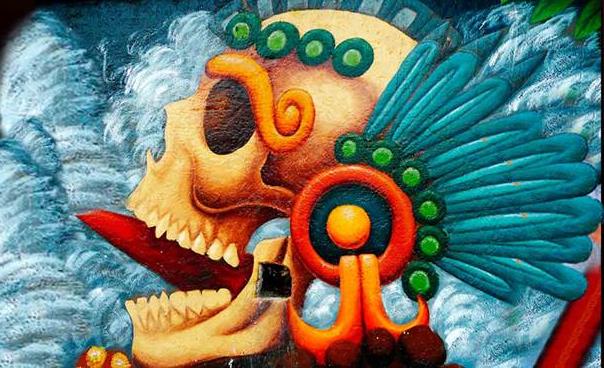
Sales of esotericas are also booming.  The most popular items are the Santa Muerte (Saint Death) statuettes, little skeletons in bridal dresses that hold a scythe in one hand and a globe in the other. Often described as a narco-cult, Santa Muerte has a broad appeal, and is in fact the fastest growing devotion in the Americas. Followers come from a diverse range of backgrounds but the saint has gained particular ground among Mexico’s poor, despite being condemned as satanic by the Catholic Church.

Santeria in Guadalajara

Santeria

A santeria altar.

Another widespread magical tradition in Mexico, Santeria, is actually of Cuban and African origin. The religion merges the worship of West African deities, known as Orishas, with the veneration of Roman Catholic saints.

Rumored to be popular among the political class, jailed union leader Elba Esther Gordillo is said to be a practitioner. The wife of former President Fox is even rumored to have added a Santeria potion to his coffee to convince him to marry her.

To learn more about the magical art, I visited the home of a palero santero, or Santeria priest. Manuel is a Mexican lawyer and freemason, who was encouraged by senior members of his fraternity to seek esoteric knowledge in a variety of spiritual and magical systems. He discovered Santeria seven years ago and travelled to Cuba for an intensive week-long ordination ritual.

Manuel gives consultations dressed in a blousy white shirt and pajama style trousers. The incense-filled room is filled with paraphernalia: cigars, candles, shells, beads, statues, fruit, rosaries. On a table was a crucifix submerged in a bowl of water, surrounded by a dozen glasses representing his dead ancestors.

sj22_opelecoconorm500

A divination chain, or opele.

To take my reading Manuel cast a chain of sixteen coconut shells, light on one side and dark on the other, onto the floor. There are 256 variations to the pattern in which they fall, each representing a specific sign. The arrangement of the shells allowed Manuel to divine messages from the proverbs associated with each sign. This meant he could dispense advice relevant to my current energy pattern, which changes every 20-30 days. I was instructed to steer clear of alcohol, avoid arguments, be careful of malicious gossip and keep religious symbols close at hand.

I followed the recommendations closely but found them to be very general in nature. It’s impossible to say how much they helped me or whether the advice came from the gods.

As well as offering readings of the future, Santeria can also offer a way to alter it, through offerings, altar building, trances and animal sacrifices.

Certainly it must be reassuring to believe that wealth, health and love can be procured through magical rites.

What attracted Manuel to Santeria was the animism of the religion, its belief that a spiritual essence pervades nature.

“I was raised as a Catholic, but I always felt God to be distant and impersonal. What I love about my religion is the closeness of the gods and their guidance.”

Twitter: @Stephentwoodman

Posted in Spirituality | Tagged , , , , , , , , , , | Leave a comment

Guadalajara’s greatest mysteries

1. The “Black Widow” of Chapala 

With a string of suspected poisonings, a strangling and an empty coffin, the case of the “Black Widow” is a narrative Raymond Chandler would have been proud of. Yet Maria Socorro Rodriguez, the femme fatale of the story, was certainly no fiction. A Mexican woman who married a string of wealthy U.S.-born retirees, Maria is suspected of bringing them all to an early grave.

Maria_socorro_de_rodriguez_lapine

Maria Socorro Rodriguez

Her first husband, a retired military officer, died after a fatal fall in their home in 1970. Her second, a retired businessman, died after an apparent stroke seven years later. The widowed Rodriguez  married again, this time to businessman James Piper, who keeled over in the bathroom of a Guadalajara restaurant in 1989.

At his memorial service in Mexico, Piper’s children grew suspicious. “She’s pure evil,” said daughter Tina Piper. “The funeral service was bizarre. She was crying but there were no tears. It’s obvious she was not feeling anything.”

Piper’s son told an NBC documentary team that he was surprised to find his father wanted to be cremated. He suspects Rodriguez forged his will so Peter’s ashes would be incinerated and an autopsy prevented.

In 1994, Rodriguez began dating Victor LaPine, a wealthy Montana rancher who had settled in Guadalajara. He also died after falling ill at a restaurant. When Rodriguez suspiciously inherited a large sum of his money, Mexican authorities began to investigate her.

Yet Maria herself died only a few months later and her mother and three children tried to cash in on a half-million dollar life-insurance policy. The insurance company flagged the claim as suspicious and a judge ordered Maria’s grave to be dug up. Nothing was in the coffin except a big stack of newspapers.

The funeral director who arranged Rodriguez’s burial was the final suspected victim. He was found strangled to death in his apartment days before he was scheduled to speak to police.

Maria disappeared without trace.

2. Is slain drug kingpin Nacho Coronel alive and well?

On a hot summer night in 2010, dozens of heavily armed soldiers descended on a mansion in Zapopan and drug boss Nacho Coronel chose to fight back rather than surrender. Known in life as the “King of crystal” for his success trafficking methamphetamine, Coronel killed one soldier and injured another before finally succumbing to his fate.

Coronel

Dug lord Nacho Coronel

Yet according to the book “Narcoland” by Anabel Hernandez, the bullet-ridden corpse at the crime scene did not belong to Coronel. Doctors reported the age of the body to be between 40 and 45, whereas Coronel was 56. The fingerprints were allegedly those of another man, Dagoberto Rodriguez. “People close to the Coronel family say the drug baron is still alive,” Hernandez reported.

As either death or capture is the likely outcome for a life of drug trafficking, Coronel certainly had a motive to fake his own demise. Doing so would have allowed him to retire in peace, without having to worry about being chased by his enemies.

President Felipe Calderon also had an incentive to declare him slain. His administration had faced persistent accusations that they favored the Sinaloa organization, of which Coronel was a leading member. Determined to show their tough stance towards all cartels, the death of the drug lord served an important political purpose.

Conspiracy theories abound, but not everyone is convinced. It is worth noting that a wave of violence followed the army raid, suggesting a power vacuum left by Coronel’s absence.

Yet the uncertainty surrounding the case reflects other narco-conspiracy theories, some of which have had substance. In December 2010, officials announced that they had killed Michoacan drug boss Nazario Moreno Gonzalez. Yet the failure to find his corpse sent the rumor mill spinning. After another gunfight three years later, and the recovery of a body, forensic experts confirmed the suspicions. The officially slain kingpin had kept up his criminal enterprise until his real death in 2014.

Amado Carrillo Fuentes is another crime lord many speculate to be alive. Estimated to have been the wealthiest criminal in history, Carrillo reportedly died on a Mexico City operating table during a procedure to alter his appearance. Yet according to a popular theory, the gangster secretly retired, and now spends his days sipping mojitos in Cuba.

3. Who killed the cardinal?

Cardinal

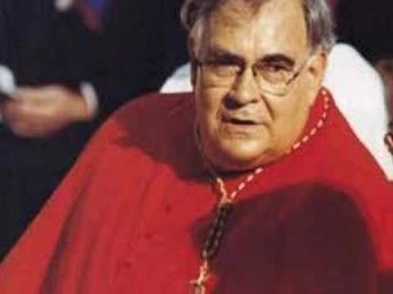
Cardinal Juan Jesus Posadas Ocampo

The 1993 murder of cardinal Juan Jesus Posadas Ocampo in Guadalajara airport sent shockwaves around the country. “For most Mexicans, it was the first time that they had ever heard of drug cartels,” said writer Ioan Grillo. According to the official story, the cardinal died as his vehicle drove into a firefight between rival gangs. Gunmen mowed him down, believing him to be Sinaloa drug lord Chapo Guzman.

The Vatican has always rejected the theory. Forensic experts reported that there had been no crossfire and that the cardinal had been hit by fourteen bullets at close range.

One scenario has the cleric being killed as he tried to organize a truce between gangsters, or broker a deal between the cartels and the government.

According to former Tijuana cartel leader, Benjamin Arellano Felix, himself implicated in the crime, a federal police commando unit killed the cardinal because “he was supplying weapons to the guerillas.” In his testimony, Arellano neglects to specify the exact group he is referring to.

The government has also been accused of the murder.

“There is a lot of proof that leads us to conclude that we are before a crime of state, prepared, organized and with the participation of security forces,” Fernando Guzman, a state legislator said.

According to an old friend of Posadas, the cardinal said that President Carlos Salinas had threatened him a few weeks before his death. Church leaders have alleged that the cardinal uncovered links between drug gangs and the government and was killed to prevent him from leaking the information.

No one has ever been convicted of the crime and debate still rages about its motivation.

Twitter: @Stephentwoodman

Posted in Crime | Tagged , , , , , , , , , , , , , , , | Leave a comment

The dark side of the Mexican ‘Hippie Trail’

Hippy trail

Hari Simran Singh Khalsa, a 25-year-old New Yorker with a wispy red beard and a contagious smile, was visiting Mexico for a yoga retreat.

He arrived with his wife, Ad Purkh Kaur, in Tepoztlan, central Mexico; a mysterious, elegant village overlooked by a mountain, at the top of which sits an ancient Aztec pyramid.

Like many visitors, the practicing Sikh couple was drawn to the region as a center of spirituality. A healing, creative energy is attributed to the town owing to the legend that it is the birthplace of the Aztec god Quetzalcoatl. As a result, Tepoztlan has become a focal point for Amerindian and Eastern spirituality. Its cobbled streets are lined with shops selling crystals, yoga mats and New Age books.

At 11 a.m, on day four in Mexico, Singh Khalsa set out on a hike, taking only a bottle of water, some trail mix and a knife.

The yoga instructor sent his wife a selfie from his phone. “Looking down on you,” he wrote from the top of a nearby mountain.

IMG_8985

Hari Simran Singh Khalsa took a final photo before falling to his death.

At around 2.30 p.m., he sent another: “I accidentally summited another mountain. Looks like I’ll be a little later coming back. Save me some lunch if you can.”

It was the last his wife heard from him. Three days later, a search team found his lifeless body at the bottom of a cliff. He had apparently died from a head injury sustained during a fall.

Stories like this are all too familiar in Mexico. Every year, newspapers run reports of foreigners on spiritual or artistic pilgrimages that ultimately end in tragedy.

The Beat Generation presented some disturbing examples. Joan Vollmer, the wife of writer William Burroughs, was shot dead by her husband in a Mexico City game of William Tell. Neal Cassady, the inspiration for the hero of Jack Kerouac’s “On the Road,” froze to death while walking along the railway tracks on a winter night in Guanajuato.

French psychiatrist Regis Airault has studied the phenomenon of “India syndrome,” when westerners lose their bearings in their search for truth on the subcontinent.

“India syndrome hits people from developed Western countries who are looking for a cultural space that is pure and exotic, where real values have been preserved,” he explains. “It’s as if we’re trying to go back in time.”
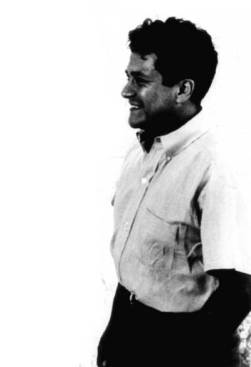
carlos_castaneda

Carlos Castaneda

Yet U.S. adventurers have shown similar symptoms just south of the border, with a “Mexico syndrome” that can be just as consuming. And just as the relationship between the Beatles and Maharishi Mahesh Yogi brought Indian spirituality to the attention of the western mainstream, anthropologist Carlos Castaneda was instrumental in bringing indigenous Mexican cultures to a wide U.S. audience.

Known as the godfather of the New Age, Castaneda inspired a generation to seek enlightenment through “mind enhancing” drugs like peyote and jimson weed. The UCLA anthropology student ventured into Mexico in 1960 and met a mysterious Yacqui seer called Don Juan. It was an encounter that changed his life, prompting him to leave his family and embark on a four-year apprenticeship under the shaman’s guidance. Castaneda recalled his experiences in the 1968 book “The teachings of Don Juan.” International acclaim followed, along with a Time Magazine cover and royalties in excess of US$1 million.

Yet several researchers found that Castaneda had copied quotes from hundreds of other sources and attributed them to the shaman. Anthropologist Jay Fikes discovered that the Yacqui Don Juan was actually based on a Huichol elder. Fikes recorded testimony from Huicholes who had met Castaneda and denied that he had become a shaman’s apprentice.

“He took bits and pieces of reality and fused them with fabricated things and put it out as if it were true,” Fikes said. “He’s up there among the best con-artists in history.”

Castaneda also projected his own interests and desires onto the culture he was studying. In Mexico, Fikes saw that shamans performed “rituals to prevent illness, to bring rain, to get the corn to grow, to bring fish, to get deer and to guarantee the things that they need to survive as a people. Don Juan was doing none of these things. He was more concerned with personal enlightenment.”

Castaneda’s fabrications inflicted lasting damage on Huichol peoples.

Inspired by his writings on peyote, hippies flooded into their lands, desperately seeking the cactus for their own psychedelic experiences.

Former Guadalajara Reporter publisher and editor Allyn Hunt was a close observer of this first wave of peyote seekers.

“The problem with foreigners coming down is they had a naive concept that everything was wonderful and they would get into trouble and have things stolen from them. They rarely spoke Spanish, and although they expected to be embraced by the people around them, they were actually viewed as intruders. Often they were abrupt and very eager to get hold of peyote.”

As a result of this invasion, the Mexican government cracked down on peyote, resulting in decades of police persecution, such as the recent arrest of two Huichol representatives in Guadalajara airport. The men were held for six days in a maximum security jail after trying to take the plant with them to a conference on preserving cultural traditions.

So quixotic foreign adventurers can be damaging both to themselves, and to the communities they come into contact with. Both were the case in 1998, when journalist Philip True set out on a solo trek through Huichol mountain-lands, to research an article on the reclusive tribe.

True’s body was found in a shallow grave at the bottom of a ravine. Neither his watch nor his wedding ring had been stolen, suggesting robbery was not the motive for his killing.

Ten days later, two Huichol men, Juan Chivarra de la Cruz and Miguel Hernandez de la Cruz, confessed to murdering True because he had taken photographs without their consent. The journalist’s backpack, containing his camera, was found at the suspect’s homes.

kpndrb-22readheroeditorlg

Philip True in the Sierra Madre Occidental mountain range.

After the accused pair recanted their confession, U.S. businessman Miguel Gatins intervened on their behalf. Pointing to the high concentration of alcohol in True’s blood, Gatins was convinced he had died from a fall.

As a result of the campaign, the two men were acquitted and returned to the mountains.

Yet two years later, Gatins withdrew his support, saying that both men had privately offered “a detailed account of their participation in the murder.”

The reputation of the tribe was unfairly tarnished by the news that two Huicholes were responsible for the murder of a foreign national.

So while True set out to celebrate indigenous peoples, like Castaneda, he inadvertently contributed to their further marginalization.

True, Castaneda, Singh Khalea and the Beats were drawn to Mexico by a desire to escape modernity and experience communal living.

Yet despite this obsession with community and cooperation, what really defined these explorers was their reckless individualism.

While “Mexico syndrome” inspires an idealized view of a “more spiritual” culture, these adventurers were also gripped the “American alone in the wilderness” myth.

This romantic notion, of “finding oneself in nature” can be seen everywhere from the writings of Henry David Thoreau, to the misguided adventures of Christopher McCandless, who died in 1992 trying to live off the land in Alaska.

Like Thoreau and McCandless, these lone figures in the Mexico wilderness were as interested in exploring themselves as their surroundings. Yet in this pursuit of their higher selves, they willfully attracted danger and left a trail of destruction in their wake.

Twitter: @Stephentwoodman

Posted in Spirituality | Tagged , , , , , , , , , , , , , | Leave a comment

How the talking dead helped forge modern Mexico

859px-Francisco_I_Madero

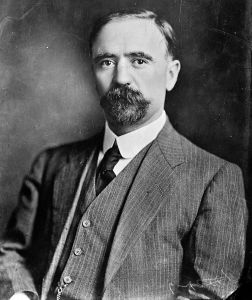
Francisco I. Madero

It is an inconvenient truth for Mexican historians that the “Father of the Revolution” Francisco I. Madero, kept in regular contact with spirits of the dead.

Yet Madero, who served as president from 1911 until his assassination less than two years later, was a deeply committed spiritist and believed he spoke to departed relatives and possibly even former Mexican leaders. Through his practice of mechanical writing, Madero put pen to paper and let invisible beings guide his hand, shakily transcribing words of wisdom from beyond the grave.

With a “Metaphysical Odyssey into the Mexican Revolution,” U.S. novelist and translator C.M. Mayo has written one of the only books to focus on this key aspect of his life.

Featuring the first English translation of his secret work, the “Spiritist Manual,” the book presents Madero’s overview of his own guiding beliefs.

Mayo’s fascinating introduction spreads to 150 pages, with an index that includes everyone from Abraham Lincoln to Oprah Winfrey, Joseph Smith to Mohandas Gandhi.

The author discovered the “Spiritist Manual,” written by “Bhima,” while scouring the archives of Mexico’s National Palace. While Madero’s archive is open to the public, Mayo was privileged with a private viewing owing to the invitation of her husband, then Finance Minister Agustin Carstens. When the curator told her that “Bhima” was Madero himself, the author “immediately recognized” that this was “a fundamental document for understanding the personal philosophy of the leader of Mexico’s 1910 Revolution.”

Madero’s complex belief system still has implications today. A businessman from Coahuila, he rejected a stolen election to take up arms against the dictatorship which had ruled for 35 years.

As Mayo explains, without his “daring and passion” the “Revolution might not have begun when it did,” and modern Mexico “might not have been able to rightly call itself a republic.”

Madero is celebrated as Mexico’s “Apostle of Democracy,” because after his successful coup, he refused to make himself president; instead choosing to campaign to become democratically elected leader.

“His commitment to democracy and the law have stood as an inspiring example for generations of Mexicans,” Mayo tells the Mexican Labyrinth. “Indeed, his remains are enshrined in Mexico’s Monument to the Revolution.”

Francisco-I.-MaderoMadero’s belief in spirits, far from being separate from his political career, was a driving force behind it. Following the doctrine formulated by French educator Allan Kardec in the 1850’s, the revolutionary believed that the dead could be contacted in a variety of ways, whether through séances, trances or mechanical writing. In this way, he sought counsel at crucial moments of his campaign, communicating with his dead brother or even, it is believed, former president Benito Juarez.

Yet despite his idealism, Madero carefully concealed his beliefs from the public. He wrote under a pseudonym and asked for discretion from his peers. In Mayo’s words, he liked to remain “coyly, and sometimes very lumpily behind the curtains.”

Likewise, in the decades following his death, Mexican politicians steered clear of mentioning this aspect of his life. In Catholic Mexico, public discussion of the topic was taboo, even as Spiritism, witchcraft and occultism were practiced in secret by many government figures.

For Mayo, references to Madero that exclude his beliefs are not just flawed but misleading. When a “surgically enhanced story is told and retold without question it becomes a kind of lie,” she warns.

As his manual makes clear, Madero’s concern with spirituality informed his every action. Apart from “mechanically writing” the advice of the dead, he practiced hypnotism, meditation and magnetic therapy. His philosophy encouraged a strictly regulated lifestyle, and he was a teetotal vegetarian who kept to a rigorous schedule.

“The man who is sober, temperate, generous to his fellows and of pure heart, is most likely to receive inspiration from higher spirits,” he notes in his manual.

Madero’s philosophical outlook may also have emboldened him politically. As a believer in reincarnation, his earthly actions were set to have implications beyond the here and now.

“Madero’s Spiritism prompted him to think of his actions as having both support in the invisible world and an impact on himself and others beyond the material plane, and beyond his lifetime,” Mayo says. “This enabled him, I believe, to strategize and act in ways most men in his position would never dare to even contemplate.”

Madero’s manual shows a clear concern with martyrdom. “We must always be ready to sacrifice ourselves for the common good,” he writes. “In this way imitating the example of Jesus and so many martyrs and heroes who have shed their blood for humanity.”

V_Huerta

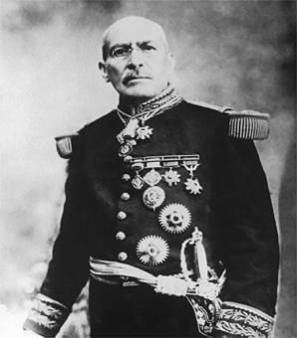
General Victoriano Huerta

Sadly, for Mexico, his words proved prophetic. In 1913, rebels marched on Mexico City and the president accepted protection from General Victoriano Huerta, only to be betrayed, arrested and shot. He was succeeded by Pedro Lascurain, who held power for all of 45 minutes, before Huerta decided he wanted power himself.

Even in his downfall, Spiritism was a factor. In the tense political climate of the age, Madero’s enemies looked for anything to smear him, and his spiritual beliefs provided perfect ammunition.

“In an attempt to discredit President Madero, his political enemies published some of the ‘Spiritist Manual’” Mayo says. “Many newspaper cartoons pictured him as a medium communing with ghosts and/or tipping tables; and after taking Madero prisoner in the coup d’etat, General Victoriano Huerta wrote to US Ambassador Wilson asking if he thought he should send Madero to the lunatic asylum.”

What’s more, we know that U.S. Ambassador Henry Lane Wilson, who was instrumental in Madero’s fall, was deeply suspicious of his Spiritism. In his memoirs, Wilson says Madero suffered from a “dangerous form of lunacy.”

Having faced such hostility in his lifetime, Madero would no doubt have delighted in the publication of his translated “Spritist Manual” more than a century on. Mayo’s introduction is itself an invitation for his philosophy to be brought center stage.

She asks her readers to “simply acknowledge that Madero was a spiritist, to understand what that means,” and “why and how it informed what he did and did not do.”

She also invites consideration of “how some friends and some enemies saw him – as leader of the 1910 revolution and as president of Mexico, in that comet-like moment when, with a heart full of love, he blazed into Mexican history and so profoundly changed it.”

Twitter: @Stephentwoodman

Posted in Spirituality | Tagged , , , , | Leave a comment

Mexico’s post-political elections

With the doorstep conversations, leaflet distribution, banner hanging, umbrella gifting, TV coverage and endless photos of raised thumbs, election season in Mexico is an all-consuming affair. Yet what is most striking about the fervent, impassioned campaigning is the sheer lack of politics on show in the run up to the June 7 midterm vote.

jalisco_candidato

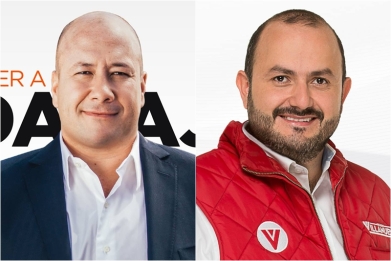
Citizen’s Movement (MC) canididate Enrique Alfaro (left) and Institutional Revolutionary Party (PRI) candidate Ricardo Villanueva (right)

In Guadalajara, Citizen’s Movement (MC) candidate for mayor and current favorite Enrique Alfaro uses the slogan “Good Government,” presumably working on the theory that no one would be opposed to the idea. His closest rival, Ricardo Villanueva, of the Institutional Revolutionary Party (PRI), is campaigning with the similarly unspecific promise of “Teamwork.” Of course, “Yes We Can” helped Barack Obama into the White House, but in Guadalajara, the empty rhetoric has taken over the entire process, so very few people have any idea about the respective policies of the parties, and debates are devoted to banal platitudes and vilification of rivals.

Nor is this a local situation, it’s a national one. Natalia Juarez, a candidate for federal deputy in Guadalajara, hit the headlines when she appeared wrapped only in a bed sheet for her campaign video. Yet every state in the country seems to have attention-hungry political hopefuls. In Mexico State, the Citizen’s Movement candidate Valentin Gonzalez Bautista is trying up to round up votes with a replica Batmobile. In Guanajuato, National Action Party (PAN) candidate Diego Levya has shot to fame with a commercial in which he sings his name and dances around in long pointy boots. In Veracruz, Deputy Renato Tronco Gomez launched a competition to find a lookalike to attend official events when he was busy.

Mexican politics is often and accurately compared to a circus, and the confusion of all this political crusading is reflected in the electorate. Cars with bumper stickers promoting several rival parties are a common sight.

Confused voters

President Enrique Peña Nieto has the lowest approval rating of any president in the past two decades, with 85 percent of Mexicans in a February poll saying they didn’t trust him. Few citizens take his promise of higher salaries seriously. Yet PRI candidates for the Chamber of Deputies enjoy a national lead of more than seven percentage points, according to a Consulta Mitofsky poll.

Political allegiances chop and change at an alarming rate, as voters react to campaigns that are centered on personality rather than policy.

Candidates revert to familiar archetypes to slander their opponents and play to the fears of the electorate. Right-wing candidates invariably malign leftist rivals as “messianic,” and “insane,” while left-wing politicians spend as much time talking about the dark, mysterious forces behind their opponents as they do about their policies.

Yet despite this circus, with its empty rhetoric and smear tactics, real political ground is at stake on June 7. Five hundred new federal deputies, nine governors and 900 mayors will be brought in following the elections.

In Mexico’s second city, Guadalajara, Enrique Alfaro and the fledgling Citizen’s Movement threaten to bring down the two-party system that has dominated since 1929.

In Mexico City, a traditional stronghold of the Party of the Democratic Revolution (PRD), the National Generation Movement (Morena) is snapping at the heels of established political power. Morena, fronted by former PRD presidential candidate Andres Manuel Lopez Obrador, is expected to equal the PRD by winning 24 percent of the local deputy spots. Morena even came out ahead in a Reforma favorable opinion poll, with 29 percent backing Morena and only 27 percent in favor of the PRD.

In the northern state of Nuevo Leon, Jaime Rodriguez Calderon, a former mayor and rancher nicknamed “El Bronco” is threatening to become the first independent candidate to win a state governorship, one of only 31 in the country. His campaign has mostly focused on social media and internet advertising.

The political circus shows no signs of quietening down, and the elections are likely to signal the maintenance of the status quo. Yet pockets of change have developed across Mexico. In the big cities especially, established political power finds itself on the back foot. Social media is playing a key role in communication strategy, independent candidates have found a stronger voice and many frustrated voters are turning to new parties.

The old, authoritarian habits of the 20th century PRI reemerged when Peña Nieto won in 2012. Yet the upcoming elections have already shown that the battle against entrenched political power is well under way.

Twitter: @Stephentwoodman

Posted in Politics | Tagged , , , , , , , | Leave a comment

FIFA indictment prompts hopes of soccer cleanup in Latin America

fifa sponsors claims

Latin American fans are delighting in the arrest of the region’s top soccer officials as part of the sweeping U.S. investigation of FIFA, the sport’s governing body. Politicians, players and sports enthusiasts have celebrated the news, with many hoping the scandal will prompt a thorough cleanup of soccer federations in the Americas.

Of the 14 figures charged with corruption, 13 are from Latin America and the Caribbean. The 47-count indictment released by the U.S. Justice Department suggests a complex, transnational network specializing in bribery, tax evasion and money laundering.

For Latin American soccer fans, scandals in domestic leagues are all too familiar. Yet many have expressed surprise that FIFA, long suspected of wrongdoings but always viewed as untouchable, has finally been confronted. Reaction from the region was overwhelmingly positive. Bolivian President Evo Morales backed the move, while Brazilian President Dilma Rousseff said her country “will only benefit” from the investigation.

Read the complete article at Al Jazeera America

Posted in News | Tagged , , , , , , , | Leave a comment

At least two dead in Mexican anti-cartel offensive linked to local police forces

tanhuato-rancho

The Mexican government has so far identified 36 of 42 presumed drug cartel affiliates killed in a security operation at a ranch near Tanhuato, in the western state of Michoacan, last Friday. Of this number, relatives of 33 have claimed their bodies. Officials declined to release further details, although most of the dead were reportedly from neighboring Jalisco state, with around 28 originating from Ocotlan, a town of 90,000 inhabitants on the north shore of Lake Chapala.

Media sources have identified several of the accused cartel members, and two of the men have established links to local police forces in Jalisco.

Edgar Ramirez Mayoral was a 24-year-old active agent in the community of Zapotlan del Rey, near Ocotlan. According to sources from the Attorney General’s Office, he had been a municipal police officer for two years. His body was claimed by a relative.

Juan Enrique Romero Caudillo was a 34-year-old man from Ocotlan whose family members said he sold scrap metal to make a living. A relative told the Associated Press that “he had been offered maintenance work at the ranch.”

policia-ocotlan----1

Ocotlan municipal police force uniforms found after the operation.

Yet in 2009, Romero worked for the Ocotlan police force and was one of ten officers involved in the fatal shooting of a citizen during a car chase. Romero was even named in a report by the Jalisco Human Rights Commission. A relative told the Associated Press that there was bruising on Romero’s face and they believed what happened on the ranch “was a massacre,” not a shootout.

Authorities said they found Ocotlan municipal police uniforms among the personal belongings at the ranch.

According to the government, all of the dead men belonged to the Jalisco New Generation Cartel, a rising criminal organization responsible for downing a military helicopter and causing a wave of 39 simultaneous road blockades earlier this month.

Twitter: @Stephentwoodman

Posted in News | Tagged , , , , | Leave a comment

Suspicions of massacre as forty-three killed in offensive against drug cartel

tanhuato-michoacan

Federal authorities have rejected suggestions that 42 presumed drug cartel affiliates who died in a police operation at a ranch near Tanhuato, Michoacan were victims of a massacre.

The government says that a group of armed criminals, the majority of whom were from Jalisco, fired on a security convoy at dawn on Friday, 22 May.

“A pursuit began that led to the ranch,” National Security Commissioner Monte Alejandro Rubido said. “The rest of the criminals inside the ranch started to attack the federal forces with intensity.” A lone federal police officer died in the operation.

The lopsided death toll and photos of the aftermath have led social media users to question whether the presumed criminals were in fact massacred after surrendering.

In one photo, a dead man lies in the grass with a badly broken arm and missing front teeth. In another, a man lies face down wearing no shoes and only his underwear, as if he had been dragged from his bed.

Some photos suggest the scene may have been manipulated. One of the presumed criminals is next to an automatic rifle but is not wearing the shoulder strap. Another is empty-handed but is next to a magazine belt in a second photo.

According to Animal Politico, witnesses said that most shots were fired from a federal police helicopter.

Enrique Galindo, head of Mexico’s federal police rejected suggestions of a massacre. “There was not one single execution, I can say that categorically.”

Rubido, meanwhile, said that all of the dead had fired shots.

“Of the 42 presumed criminals that died, every one tested positive for sodium nitrate,” Rubido said, suggesting that gunshot residue incriminated the dead.

Yet security analyst Alejandro Hope identified two problems with the government’s version of events.

“First, the photos that appear to show some bodies were moved. Second, they recovered fewer weapons than there were victims,” Hope said. “It’s very strange.”

Authorities say the presumed criminals were members of the Jalisco New Generation Cartel, the organization responsible for downing a military helicopter and organizing a wave of coordinated road blockades on May 1. Officials have yet to release the names of the 42 dead, although most were reportedly from Jalisco, with at least 28 originating from Ocotlan, a town of 90,000 inhabitants on the north shore of Lake Chapala.

On Monday, May 25, funerals for the deceased were held throughout the town. Ocotlan has made headlines for drug violence twice in the past few months. On March 19, five members of Mexico’s new militarized police, or gendarmerie, were killed and eight wounded when they were ambushed by members of the Jalisco New Generation Cartel.

Shortly after the news broke of shooting in Tanhuato, the National Human Rights Commission sent a team to investigate the scene. Concerns of a possible massacre stem partly from the recent history of extrajudicial killings carried out by state forces. In the past year, Mexico has seen at least three cases of unarmed people being murdered by security forces: the army massacre in Tlatlaya, Mexico State, the Ayotzinapa student killings in Iguala, Guerrero, and the execution of civilians in Apatzingan, Michoacan.

Twitter: @Stephentwoodman

Posted in News | Tagged , , , , , , , | 1 Comment